Roof Repairs
Leaks, slipped tiles and cracked pointing across Macarthur, where hail dents and heat-stressed ridge mortar account for most call-outs.
Learn more →Clean, re-bed, re-point and recoat ageing concrete and terracotta tile roofs across the Macarthur suburbs. Free inspection and itemised written quote.
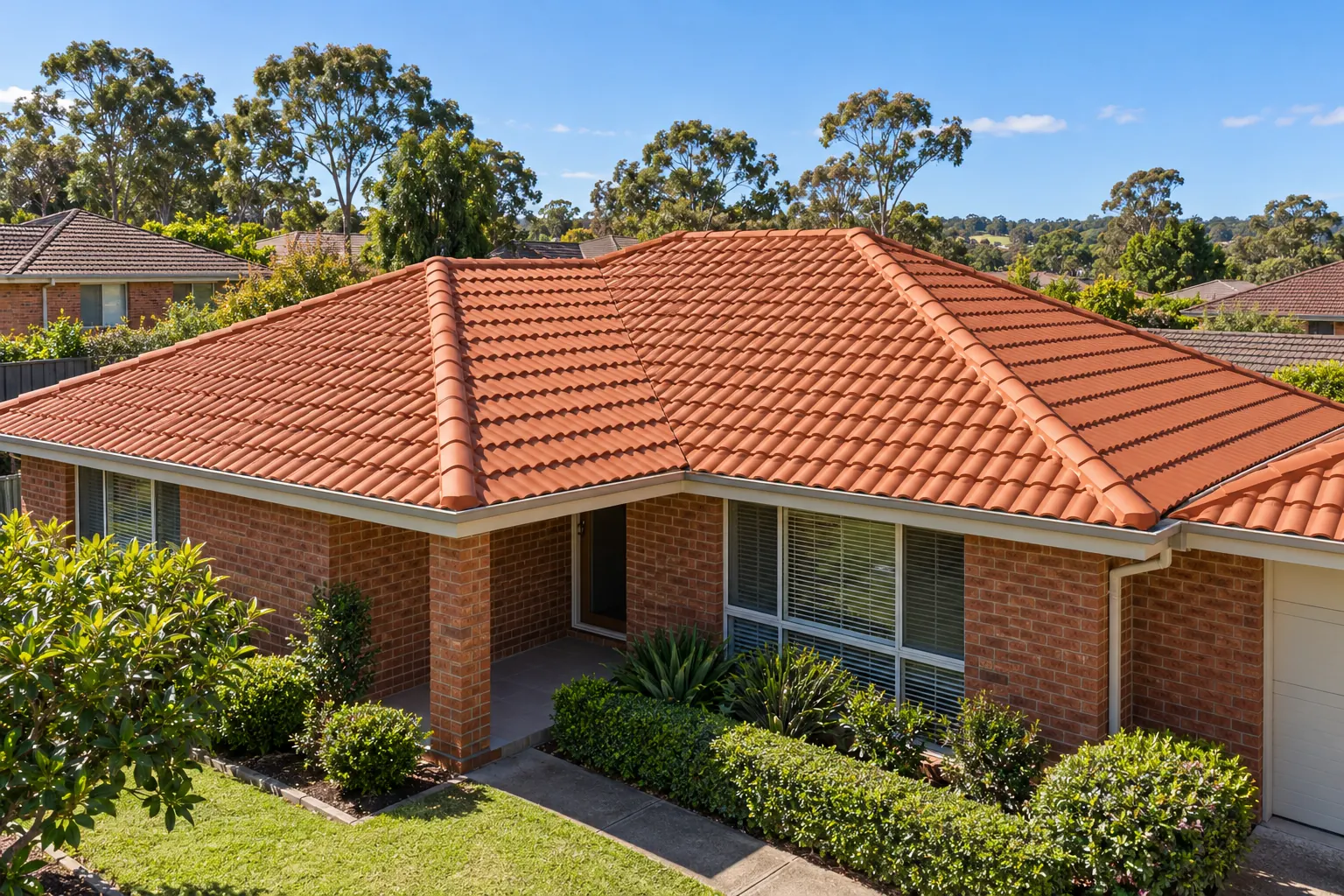
Leaks, slipped tiles and cracked pointing across Macarthur, where hail dents and heat-stressed ridge mortar account for most call-outs.
Learn more →Re-roofing in tile or Colorbond for the ageing brick-and-tile estates around Campbelltown and the newer builds at Oran Park and Gregory Hills.
Learn more →Colorbond re-roofing and new installs across Macarthur, including full tile-to-metal conversions on 1970s and 80s homes.
Learn more →Gutter and downpipe replacement sized for Macarthur storm runoff, plus leaf guard where gums overhang the roofline.
Learn more →Same-day make-safe after a Macarthur hailstorm, with photographed damage reports you can hand straight to your insurer.
Learn more →Written roof reports across Macarthur for buyers, sellers, landlords and insurance claims.
Learn more →Drive through Minto, Woodbine or Rosemeadow and look at the roofs rather than the houses. You will see the same thing repeatedly: tiles that have faded to a chalky grey, dark moss streaks on the south-facing planes, and ridge lines with gaps where the mortar used to be.
That is a restoration candidate, not a replacement. Roof restoration across Campbelltown, Camden and the Macarthur suburbs brings an ageing tile roof back to a watertight, maintainable condition without the cost and upheaval of a full re-roof. Free inspection on (02) 4601 5100.
There is a reason this service matters more here than in most of Sydney. The Campbelltown estates of the 1970s, 80s and early 90s went up quickly and in volume, almost all in concrete tile, and those roofs have now hit the same milestone at roughly the same time.
The tiles themselves are often fine. Concrete tile is a tough product. What has expired is the cement pointing on the ridges, the galvanised valley irons, and the thin factory surface layer on the tile face that keeps it from drinking water. Three components, all replaceable, on a roof structure that still has plenty of service in it.
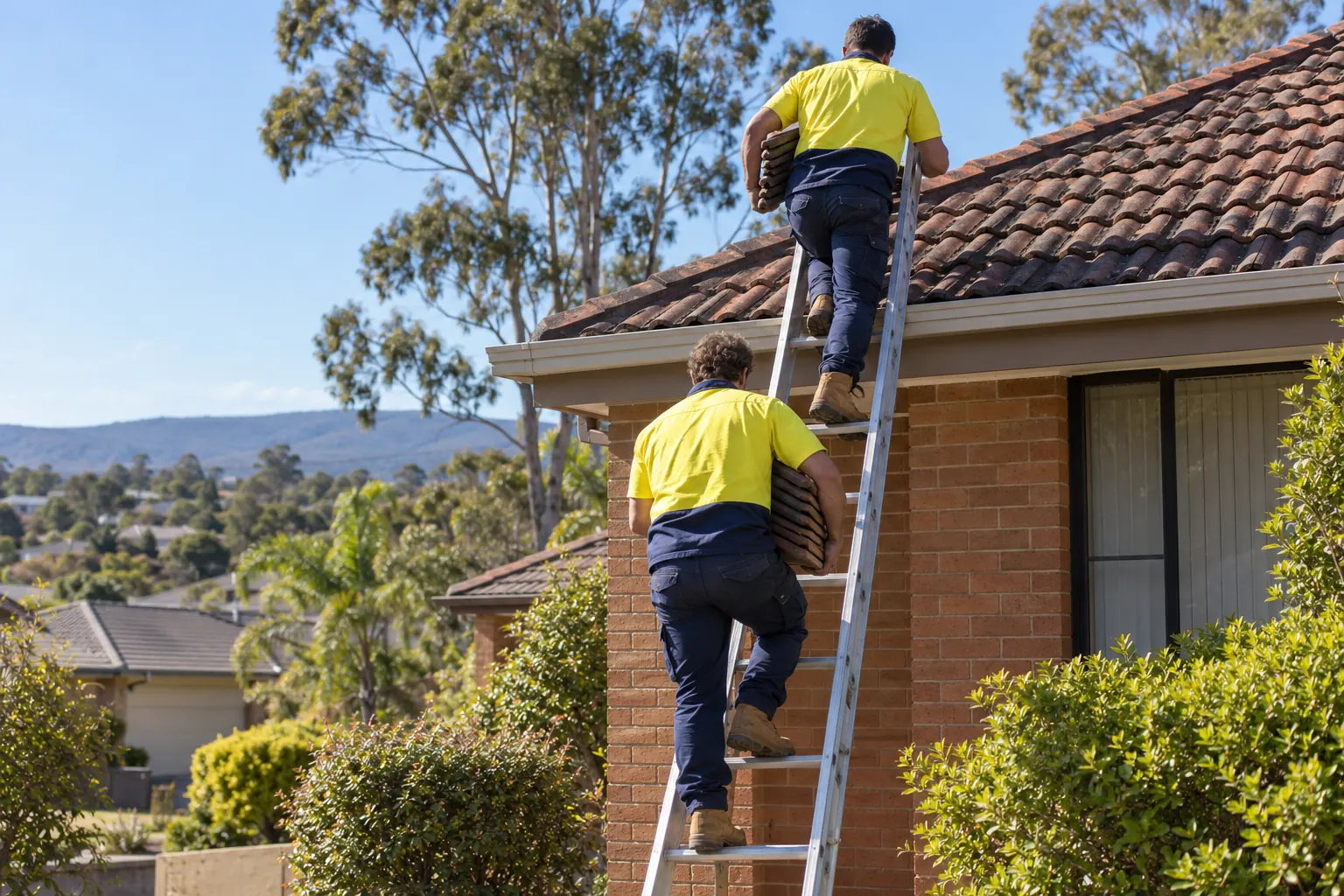
The roof gets walked and the tiles sounded. Cracked, chipped and slipped tiles come out and matched replacements go in. Valley irons are assessed, and rusted ones are replaced at this stage rather than coated over, because no coating saves a valley that has already gone.
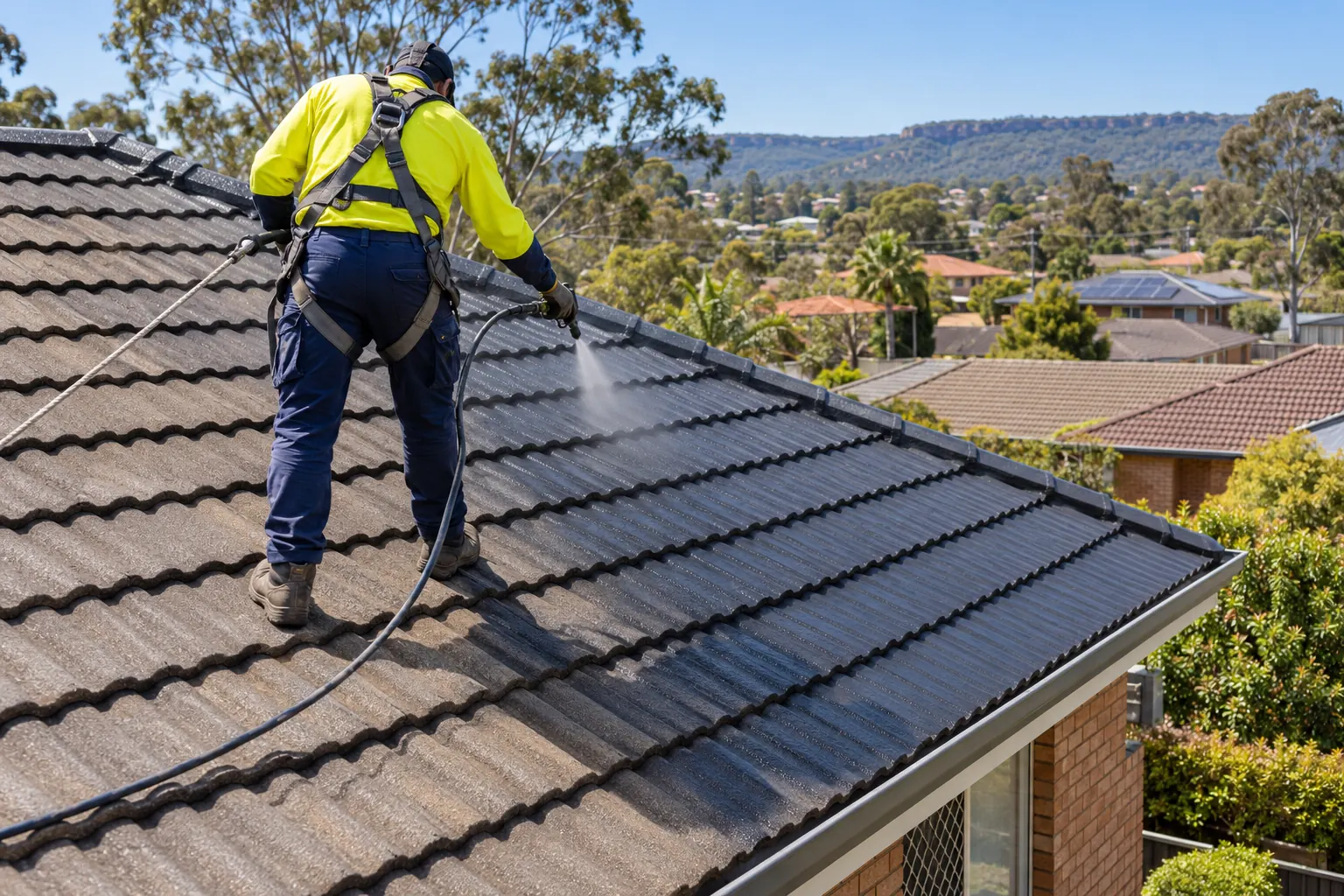
Moss, lichen, oxidised surface material and years of organic debris come off. On the shaded southern planes under established gums — common through the older streets at Bradbury, Airds and Ruse — this is where most of the volume comes from. Gutters and downpipes get cleared of the slurry afterward.
Caps that have lost their bedding mortar are lifted, the old mortar is removed, and they are re-laid in fresh bedding on the correct line. This is the structural stage. A rocking ridge cap is the fault behind a large share of the leaks in this district.
Then the caps are pointed with a flexible pointing compound rather than rigid cement. This is the single most important upgrade in the whole process. Macarthur heat cycling is precisely what cracked the original mortar — flexible pointing is designed to move with that expansion instead of fracturing under it.
Finally the tile surface is primed and then coated, usually in two passes. This restores the water-shedding surface the tiles lost and, yes, makes the roof look new again.
We would rather talk you out of it than take the money for a job that will not hold.
In any of those cases the conversation should be about roof replacement instead, and we will tell you so at the inspection.
Around Camden, Elderslie and the older pockets near Queen Street in Campbelltown you will find genuine terracotta rather than concrete tile. Terracotta is glazed and does not want the same treatment: it is generally cleaned, repaired and re-pointed rather than coated, and the glaze does most of the waterproofing job by itself.
In a heritage conservation area that distinction becomes a planning matter as well as a technical one. Raise the address at the inspection.
A restored roof is not maintenance-free, but it is maintenance-cheap. Keep the gutters and valleys clear, especially under the big established trees in the older estates, and have the ridges looked at every few years. Most restorations that disappoint were fine until a blocked valley went unnoticed for three wet seasons. Our gutter work usually gets done at the same time, because the access is already there.
Restoration is quoted on roof area, the metres of ridge and hip to be re-bedded and pointed, how many tiles need replacing, how many valleys are going in, pitch, storeys and access. A courtyard home in Currans Hill and a sprawling single-storey in Raby can price very differently for the same apparent job.
The inspection and the itemised written quote are free and carry no obligation. Call (02) 4601 5100, or describe the roof in the quote form and we will come and look at it.
The coating is the cosmetic part. The structural value is in the two stages before it: re-bedding ridge caps that have come loose and re-pointing them with a flexible compound instead of the rigid mortar that cracked. That is what stops water tracking under the caps. A roof painted without that work done underneath looks good for a season and leaks the same as before.
On a roof where the tiles are still sound, a properly executed restoration buys you a long extension rather than a short reprieve, and it resets the maintenance clock on the ridges and valleys. What it cannot do is add life to tiles that have already gone brittle. The inspection decides which of those two situations you are in, and the answer is not always the one we would prefer to sell.
Sound concrete tiles handle it fine, and the cleaning stage is where most of the moss, lichen and surface build-up comes off. Brittle tiles do not, which is exactly why the roof gets walked and sounded before anyone starts a pressure washer. If a roof is going to lose tiles under cleaning, we would rather find that out at the inspection and talk about replacement instead.
A lighter coating reflects some heat, which helps at the margin. It is not an insulation upgrade, and we will not pretend it is. If the real problem is a baking roof cavity through a Macarthur January, roof ventilation and ceiling insulation move the needle much further than paint colour does.
Careful work, yes, and coating decisions on heritage buildings need thought rather than a default. Camden town centre and its surrounds sit in a heritage conservation area, and an original terracotta roof there is often best cleaned, repaired and re-pointed without a modern coloured coating over it. We would rather do less and keep the building honest.
Tell us what you need and we'll get straight back to you. Prefer to talk? Call (02) 4601 5100 and speak to someone local.
Call (02) 4601 5100